Protein isn't for women (or men).
The "for her" label is marketing. Your body can't read it, and it usually costs you more.
Walk down any supplement aisle and you'll find the same product twice: the regular one, and the "for women" one: smaller, softer in colour, a little more expensive. It's worth knowing what you're paying extra for, because usually it's very little.
Protein is a set of amino acids. Your body breaks it down and uses those building blocks the same way whether you're a woman, a man, a teenager or your grandfather. There is no women's version of an amino acid. The same goes for the other things these products lean on: fibre feeds the same gut bacteria in everyone, magnesium does the same job in every body, and a good night's sleep isn't gendered either.
So what is the "for her" version, usually? The same formula in a smaller serving, sometimes with a token pinch of iron or a "beauty" ingredient added so the label has something to point at. The reason it exists is simple: a smaller, prettier, pricier product is easier to sell than a better one.
Your gut absorbs the amino acid,
not the packaging.
What "made for women" can honestly mean
There is a version of "made for women" that isn't a gimmick, and it's a design choice rather than a different protein. It means building something around a real, specific need (like the craving-heavy, bloated days of your cycle) and tuning the taste, the portion and what you leave out around that.
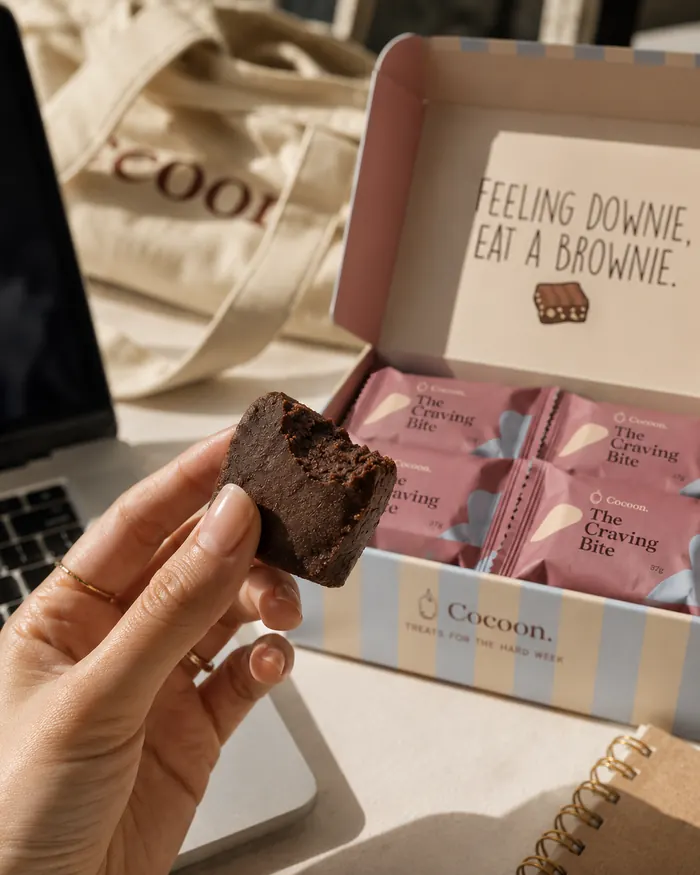
That's what we did with Cocoon. We had that week in mind for the sweetness, the size, and the decision to keep out the things that bloat you. But the food itself is just food: real protein, less sugar, nothing that ferments in your gut. Made for that week, and good for anyone who picks up the box, at the same price.